
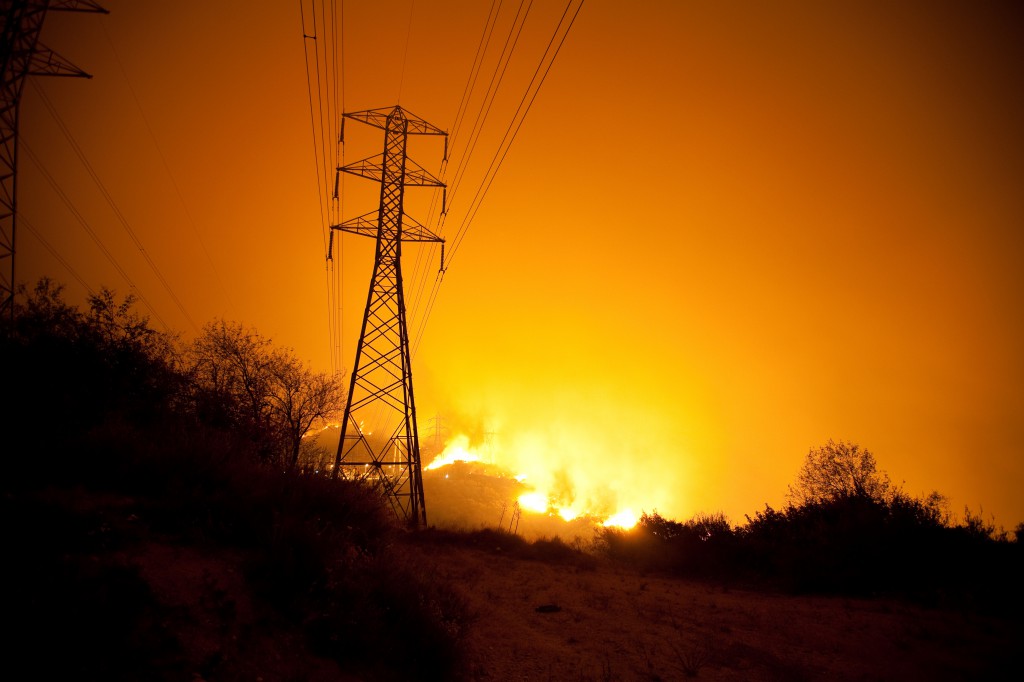
Texas utility wildfire regulation is accelerating, and the latest PUCT guidance raises the stakes for every electric provider in the state.
From Disaster to Legislation: A Seven-Month Timeline
The regulatory progression now unfolding in Texas has a specific origin point. In February 2024, the Smokehouse Creek Fire tore through the Texas Panhandle, burning over one million acres and becoming the largest wildfire in state history. The scale of the disaster made clear that existing utility practices around wildfire risk were insufficient, and the 89th Texas Legislature responded with a comprehensive package of reforms in 2025.
Central to that package was House Bill 145. When Governor Abbott signed HB 145 into law effective September 1, 2025, Texas electric utilities entered a new regulatory era. For the first time, utilities, cooperatives, and municipally owned providers operating in designated wildfire risk areas were legally required to develop and submit formal Wildfire Mitigation Plans. Those plans must cover inspection procedures, vegetation management strategies, and coordination protocols with emergency response entities. Utilities that fail to comply face administrative penalties, and self-insurance protections for wildfire liability are explicitly excluded in cases involving gross negligence or reckless conduct.
The PUCT Blueprint: Implementation Standards Arrive
Legislation established the obligation. The April 17, 2026 PUCT release establishes how to fulfill it.
The Public Utility Commission of Texas released a standardized blueprint and guidelines under Rule §25.60, giving every Texas electric utility a concrete framework for building a compliant wildfire mitigation plan (WMP). The blueprint addresses three core areas: vegetation management programs in high-risk areas, operating protocols for high-risk weather conditions, and emergency coordination requirements. Importantly, the blueprint is not a mandatory template – utilities retain flexibility to tailor plans to their specific service territory, equipment, and risk profile – but it establishes a common structure for regulatory review and public transparency.
As PUCT Executive Director Connie Corona stated in the announcement, utilities now have a clear starting point for organizing plans that put public safety and electric reliability first, and Texans deserve confidence that utilities are taking concrete steps to reduce wildfire threats to homes, businesses, and reliable electric service.
All electric utilities operating in Texas must submit plans that meet the standards outlined in §25.60. Plans must be renewed every three years, with annual reporting requirements and after-action reporting requirements following any wildfire event impacting utility facilities.
Texas Joins a National Trend
Texas is not acting in isolation. California pioneered utility wildfire mitigation plan requirements following the catastrophic 2017 and 2018 fire seasons, and Oregon, Colorado, and other states have followed with their own frameworks. The pace of adoption is accelerating nationally as climate data increasingly shows longer fire seasons, higher fuel loads, and greater geographic spread of wildfire risk. For Texas specifically, a May 2025 Texas 2036 analysis of First Street Foundation data projects that nearly nine million properties, 70% of all properties in the state, face some wildfire risk over the next 30 years.
What Compliant Vegetation Management Actually Requires
The shift from regulatory obligation to operational execution is where most utilities will face the hardest challenges. Vegetation management has historically been driven by standardized trim cycles and broad clearance standards using approaches that were workable when the primary concern was reliability, but that fall short when wildfire risk enters the equation.
Wildfire risk is not uniform. A drought-stressed live oak in a high fire-weather corridor carries a fundamentally different ignition and spread risk than a slow-growing cedar in a low-risk zone. Compliant WMPs require utilities to identify and document vegetation conditions in high-risk areas with enough specificity to support defensible, risk-stratified management decisions. That requires data: spatially accurate, species-aware, and current enough to reflect dynamic conditions across thousands of miles of transmission and distribution infrastructure.
Manual inspection methods and legacy data systems are not well-suited to this requirement. They are slow, expensive, labor-intensive, and produce inconsistent outputs that are difficult to audit or defend in a regulatory review. Workforce constraints compound the problem and the qualified electrical worker shortage is a documented and widening gap across the industry.
How Sharper Shape Supports WMP Compliance
Sharper Shape’s platform, Sharper CORE (Cloud Optimized Remote Evaluation), is purpose-built for exactly this operational challenge. Built on 8.3 petabytes of proprietary training data and designed for distributed grid assets at scale, CORE enables utilities to move from manual, reactive vegetation management to automated, proactive risk management.
CORE’s capabilities directly map to the requirements utilities must address in their WMPs. LiDAR-based vegetation encroachment analysis identifies where vegetation is proximate to conductors and structures, with sub-10 centimeter accuracy at the component level. Planners, inspectors, and engineers can visually triage risks, validate work orders, and simulate scenarios in real time through an accessible 3D interface, supporting consistent decision-making across asset management, vegetation, compliance, and engineering teams.
The result is a shift from uniform trim cycles to risk-stratified vegetation management programs: ones that prioritize the right work in the right locations, generate the documentation and audit trail required for regulatory submission, and hold up under scrutiny when plans are reviewed or challenged.
For utilities that have relied on paper-based workflows and periodic manual surveys, the gap between current practice and WMP-compliant practice is significant. Platforms like CORE exist to close that gap efficiently and at scale.
The Path Forward
Texas utilities now have both the legal requirement and the implementation framework. The practical work of building compliant WMPs begins with having reliable, current, defensible data about vegetation conditions across service territories. Utilities that move early will have more time to refine their plans, address deficiencies, and build the internal workflows needed to sustain annual reporting requirements. Those that wait will find themselves compressing that process into an already demanding compliance timeline
.
Sharper Shape works with utilities across North America to build the data foundation that vegetation management and wildfire planning programs require. If your organization is working through WMP development and wants to understand how CORE can support your program, contact us to learn more.
Sharper intelligence for a safer world.